Stainless Steel Boundary: How to Build an Access Path
A stainless steel delineation balustrade orders the flow of people to turnstiles, receptions or counters. The ONSEC modular system combines end poles, 90° and 180° poles, 1 or 2 meter bars, wall supports and mounting handles buried in the floor.
In short: draw the route, numbers the heads and corners, choose the length of the bars and decide the applied or buried frame of the pillars.
Do you need help choosing?
Tell us what you need and we'll send you the offer on the same working day.
A well-defined path makes access predictable: people know where it goes, where it waits and where it goes. End, corner and passing pillars, bars of 1 or 2 metres and wall supports are combined according to the plane of space. Think about the route along with the turnstiles and exits, then choose the applied or buried mount. Choose the appropriate stainless steel delineation balustrade from the category Guidance and queue systems.
A stainless steel delineation balustrade turns a crowded hall into a clear path. People understand where they go in and where they go out. However, the result depends on the correct choice of the poles and bars. In this guide we build step by step a path, with pieces of category Guidance and queue systems.
Why choose a stainless steel bordering rail
Stainless well resists wetting and frequent cleaning. Therefore, it fits into office entrances, sports halls or sidewalks. Product descriptions speak of integral construction of stainless steel. Thus, the aspect remains cared for over time. In addition, the modular system allows the extension of the route later. For example, at a gym, the balustrade separates the reception from the hallway to the dressing room. At the same time, at the checkpoint, it forms the queue without provisional bands.
Parts of a stainless steel delimiting system
A path has heads, corners and intermediate points. Each one asks for another pillar.
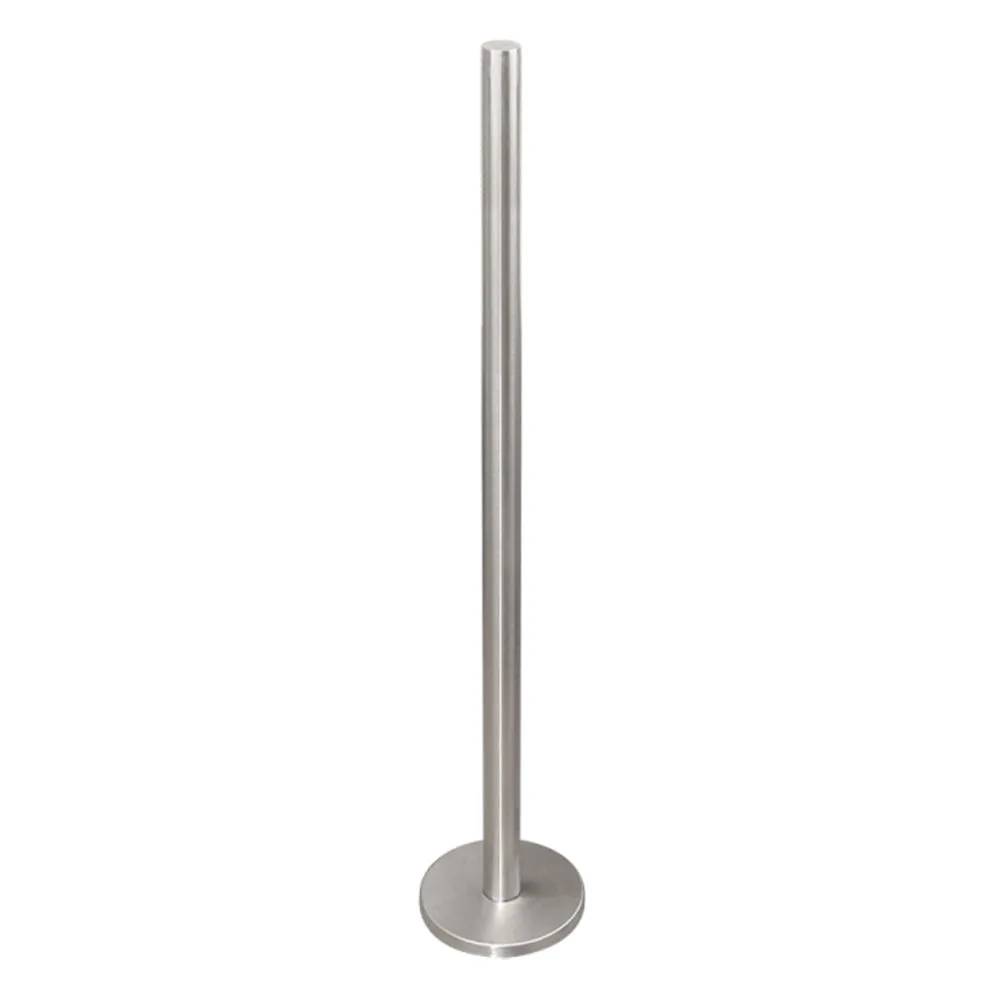
- The 1070 mm end pole closes the path in a single direction.
- Model guide pole 90° form the corners, all at 107 cm.
- The 180° range continues the straight line between two bars.
- The connecting bars come in lengths of 1 m and 2 m.
- The K-FKARM wall bracket secures the end of the balustrade directly to the wall.
Thus, a stainless steel delineation balustrade is composed as a play of pieces. Also, the number of pillars results directly from the length of the route.
Stainless steel balustrade for flow: segments of 1 and 2 meters
For fixed lengths you have two options ready made. Model 1 metre balustrade It has a diameter of 32 mm. Instead, K-CS-2M Covers 2 metres with the same diameter. Therefore, combine segments after the available space.
Mounting applied or buried for stainless steel railing
The pillars for limiting the access path come in two mounting variants. First, K-O has 1000 mm and is mounted on the floor. Then, K-KIO It's 1200 mm and it's mounted in the ground. At the same time, the end pillar K-KIVO uses all buried mounting.
For buried variants use the K-PERS handle, which is not included. So, you order the handle separately, one for each pillar. In other words, a buried stainless steel delineation balustrade requires floor preparation. Instead, the applied mount goes on a finished floor.
How you draw the path
- Measure the width of the hall and the place of the turnstiles.
- Trasează pe plan culoarul de intrare și pe cel de ieșire.
- Count heads, corners to 90° and continue points to 180°.
- Share the lengths in bars of 1 m and 2 m.
- Then choose the mount, applied or buried.
For example, an L-way with 5 meters on one side and 3 meters on the other requires a 90° corner. On the long side, two bars of 2 m and one of 1 m cover the distance. Then add the end pillars to both ends. Finally, check the plane for room for the output stream. Thus, a stainless steel delineation balustrade is calculated simply from the plane.
Delimitation next to turnstiles and gates
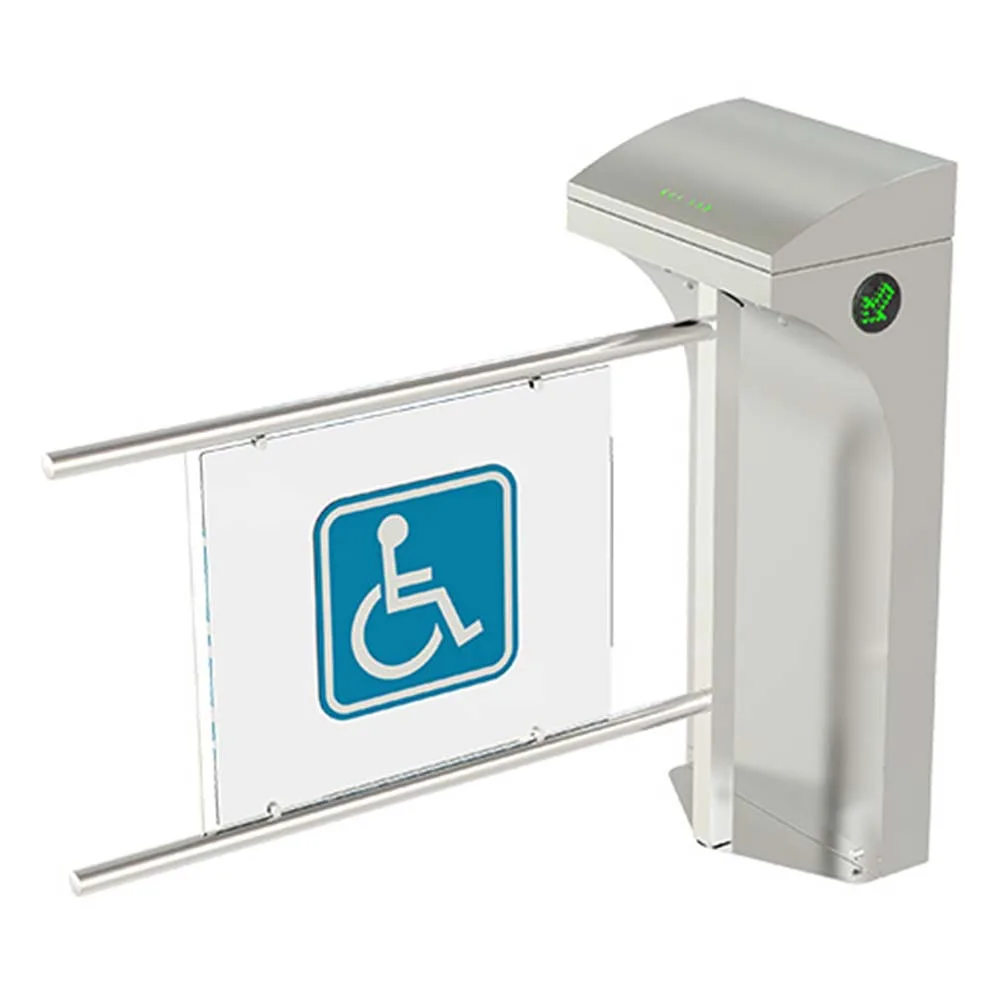
Balustrada guides people to Tripod tourniches and prevent their circumvention. It may also lead persons with wheelchairs or wheelchairs to the side of the Reduced mobility access. Therefore, the route and turnstiles are designed together.
Examples of Stainless Steel Boundary Configurations
The first example comes from an office reception. Here, two parallel lines form a corridor to the turnstile. Thus, each line has one end pillar at the entrance and one at the turnstile. The second example appears at a strand, where entry and exit stand by. In this case, a central line separates the two flows. The K-FKARM wall holder also closes the end next to the wall.
The third example is the waiting-tail boxes. Here, the zigzag corridor uses several 180° and 90° poles. Therefore, a stainless steel delineation balustrade orders the tail without additional personnel. At the same time, the modular system allows the path to be moved when the layout changes.
Maintenance and cleaning
The inox requires simple, but regular care. First, wipe out your hand prints with a soft wash. Then use suitable solutions for stainless steel without abrasives. In addition, periodically check the bar assembly in the pillars. Thus, a clean and properly fixed stainless steel rail keeps its appearance neat.
Safety on evacuation
A stainless steel delineation rail shall not block emergency exits. Especially in public spaces, evacuation routes have priority. For example, let the passage to the exit of the emergency free on all its width. Then check that the route does not force people to go around through narrow spaces. At the same time, he's discussing the location with the building's fire department. The final solution shall be established after the project, risk analysis and the requirements of the authorities. Information on fire prevention and evacuation found on the website IGSU.
Frequently Asked Questions about Stainless Steel Boundary
What heights do guide pillars have?
The end pillars, 90° and 180° are 1070 mm. The K-O model is 1000 mm and K-KIO is 1200 mm. Therefore, the same height of the poles on a stainless steel railing track.
The K-PERS Mansion comes in the package?
No, no. You order it separately for each pillar with a buried mounting. Thus, you foresee it from the plan phase before the flooring.
Can I get the wall balustrade?
Yes, through the K-FKARM wall holder, as an end element.
What are the lengths of bars?
The connecting bars and balustrades come in variants of 1 m and 2 m. Thus, you easily adjust the length of a balustrade after space.
You want to calculate the route? See all the pieces in the category Guidance and queue systems. The ONSEC team helps you to choose stainless steel guiding poles and bars suitable for your plan.