Wireless module transmitter: wireless control for automation
A wireless module transmitter sends radio commands to automation where the cable does not reach or would spoil the finishings. In existing homes and buildings, such modules convert an ordinary button, wall or network to a command point for gates, doors and rollers.
In short: a wireless module transmitter replaces the control cable; choose between battery and network, between buttons, Wi-Fi, GSM or Bluetooth.
Do you need help choosing?
Tell us what you need and we'll send you the offer on the same working day.
Wireless control elegantly solves extensions and renovations. On the battery or on the network, in the dose or applied to the wall, the transmitter sends the command directly to the receiver. For remote control, Wi-Fi, GSM and Bluetooth interfaces link automation to the phone or computer. Check the frequency, protocol, and number of channels, then choose. Find each wireless module transmitter in the offer category Transmitter modules.
A new cable through the wall means dust, broken plaster and repainted paint. A wireless module transmitter avoids this work. He takes over the local command and radios it to the automation receiver. In this article we see what types exist and how you choose the right option.
What makes, concrete, a wireless module transmitter
The principle remains simple. The module has buttons inputs and a radio transmitter. When you press a button, the module sends a code to the receiver. Then the control unit executes the scheduled manoeuvre. Therefore, a wireless module transmitter leads to wireless motor control between wall and automation.
However, the receiver must understand the issuer protocol. For example, a Nice module works naturally with compatible Nice receivers. Category transmit modules You find Nice and BFT variants, so check the automation mark before ordering.
Wireless receiver: battery or network
Nice proposes two four-channel variants, on 433,92 MHz. Both use dynamic 52-bit coding. The difference holds power.
- Nice TTXB4 operate on long-lasting battery and accept up to four optional cable buttons.
- Version Nice TTX4 power from the network; the manufacturer describes a load of up to 1000 W/500 VA.
So, you choose TTXB4 when you don't have a dose. Instead, TTX4 matches where the network already exists. Both enter the dose in the wall, so the button remains discreet. In other words, a wireless built-in module transmitter retains the appearance of an ordinary switch.
Remote wall control: solution without dose
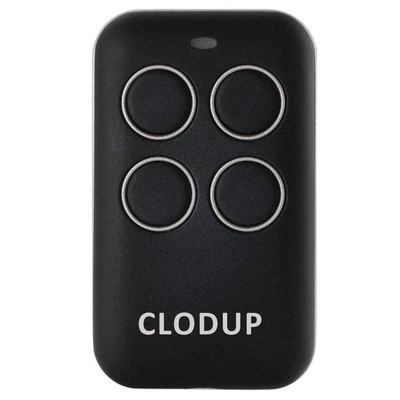
Sometimes you don't want to break the wall at all. In that case, BFT MIME PAD offers four wireless channels in a wall housing. Basically, it works like a fixed keyboard with buttons. The communication takes place via radio, so the BFT receiver stores it like any remote control. So you can grab it by the garage door or in the lobby. For the user, the result resembles a wireless module transmitter, but without any construction work.
Wireless module transmitter via Wi-Fi, GSM or Bluetooth
Local command is not the only option. Some modules link the automation of the phone or computer. In this case, the wireless module transmitter role takes over a network interface.
- Interface Nice CORE communicate via Wi-Fi and control radio receiver automations for gates, doors, barriers or blinds.
- The Nice OVBTGSM module allows the GSM control of the O-View network, linked to the BUS T4, with access via GPRS.
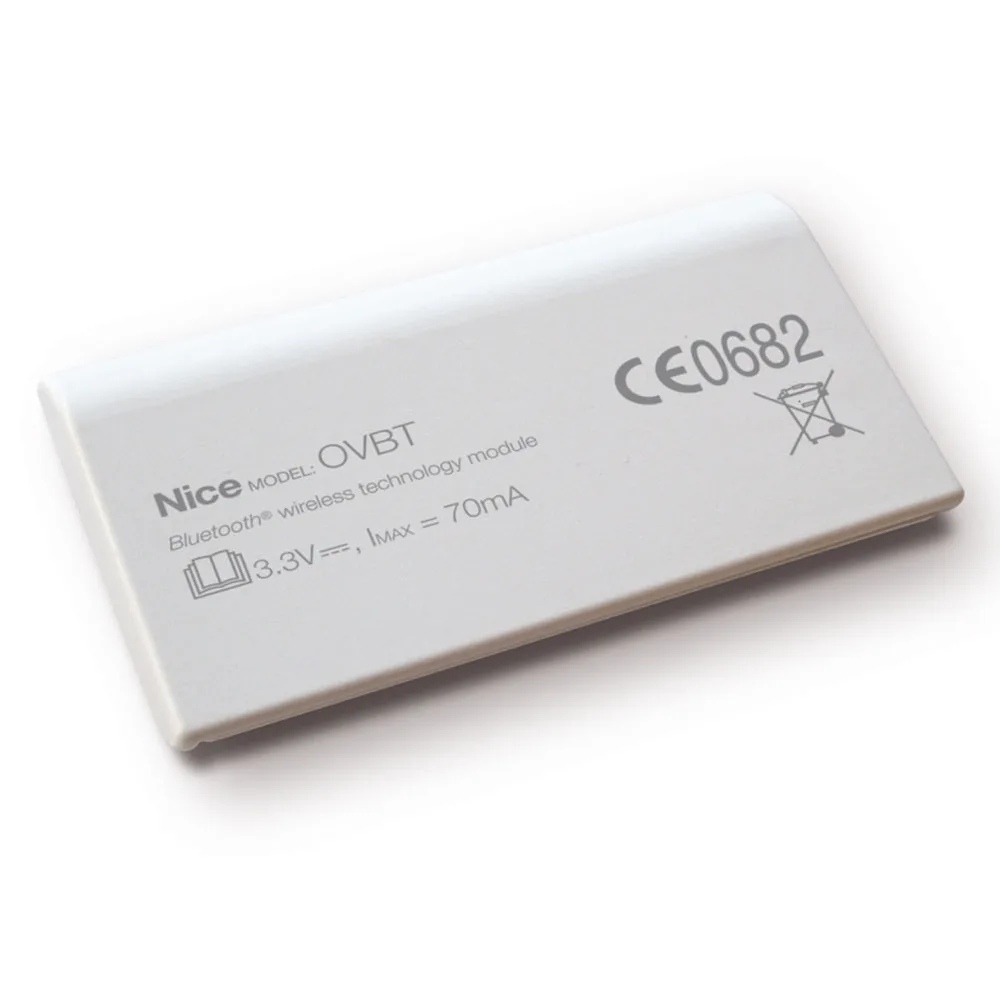
- With Nice OVBT, the technician connects via Bluetooth to O-View, from a maximum of 15 m.
Therefore, choose CORE for daily use in the application. Instead, OVBTGSM and OVBT serve mainly administration and programming. For GSM modules specially designed for gates, see also category GSM controller.
Where a wireless module transmitter fits
- Renovated houses, where you don't want new cables through walls.
- Garages with the control button away from the motor.
- Rolls and covers ordered from one point only.
- Buildings where the administrator manages several automations.
Also, a wireless module transmitter helps extenders. Add a new command point without changing the existing installation. Especially in homes, this advantage matters a lot.
Practical example: a new garage button
Let's take a regular case. garage door has built-in receiver motor, but the button in the house is missing. A new cable would cross two finished rooms. Instead, mount a TTXB4 into the dose of an existing switch and attach a button to it. Then you memorize the code in the motor receiver. The result is a fixed button in the lobby, without any digging. Practically, a wireless module transmitter does here work on a long cable.
What you check before choosing
- Frequency of the receiver, e.g. 433,92 MHz.
- The Protocol and the mark of automation.
- The type of feeding available in the dose.
- The number of channels, that's how many control automations.
- Distance between transmitter and receiver, plus walls between them.
Thick walls and metal structures reduce radio radius. Therefore, test the order from the final place before closing the dose. For European technical rules applicable to radio equipment, you can consult Standardisation Association of Romania.
If the existing receiver does not accept the code, you can add an external one. Find variants in the category radio receivers. Thus, the same receiver receives commands from a wireless module transmitter and from remote controls.
Transmitter radio modules on battery: maintenance
The option on the battery has a clear advantage: do not ask for phase in dose. However, any battery is discharged in time. Nice talks about a long-lasting battery at TTXB4. However, note the assembly date and check the radius once a year. If the radius of a radio module transmitter drops, change the battery first. You are only looking for other causes, such as interference or furniture moved in front of the dose. In addition, keep the manual with the memorisation procedure, because some receivers require the code to be re-learned.
A small detail: the LED module Nice ELMM
Category includes and LED module Nice ELMM. He's riding on the EPMOR photocells. Do not send orders, but complete the security accessories of the gate. However, do not confuse it with a command transmitter.
Frequently Asked Questions: Wireless Module Transmitter
Do I need the electrician for the assembly?
For TTX4, yes, because you work with network voltage. TTXB4 goes on the battery, but the assembly in the dose requires all attention.
Does it work with any automation?
Not automatically. The receiver shall accept the protocol and frequency of the transmitter. Therefore, check the brand and model before.
How many channels do I have?
TTXB4, TTX4 and MIME PAD have four channels. Thus, a wireless module transmitter of this type commands up to four functions or automations.
What do I choose for phone control?
For daily use, the Nice Core interface via Wi-Fi. For remote O-View network administration, the OVBTGSM module.
See all variants in the category Transmitter modules and choose a wireless module transmitter according to your home or building. The ONSEC team helps you check compatibility with the existing receiver.